
Meet The Artist
Edward Stachura
Edwaed Stachura (1937–1979) was one of the most distinctive and influential voices in postwar Polish literature. Born in France to Polish emigrant workers, he returned to Poland as a child and grew up in the countryside, an experience that deeply shaped his sensitivity to landscape and solitude. He studied Romance philology at the Catholic University of Lublin and quickly emerged as a writer whose work resisted easy categorization. Poet, novelist, essayist, and songwriter, Stachura cultivated the image of a restless wanderer, often blurring the boundary between his life and his art. His poetry is emotionally powerful and often explores themes of the human condition. His prose works are known for their insight, reflecting the complexity of human experience.
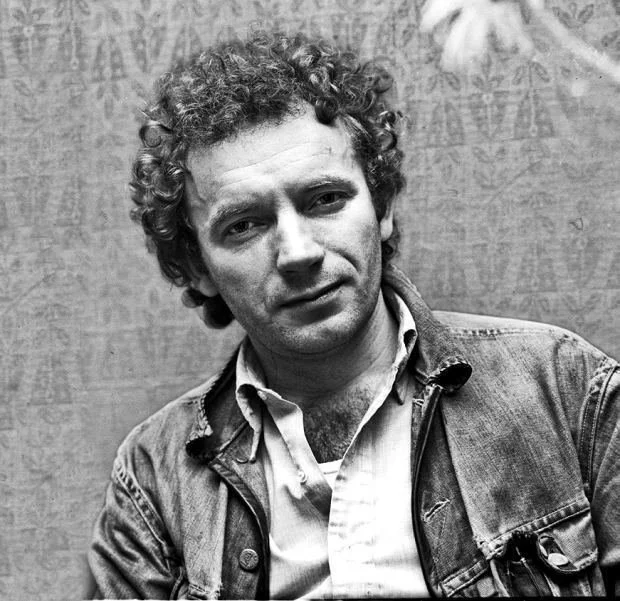
His writing frequently centers on the figure of the outsider—someone searching for authenticity in a world experienced as alienating and false. Works such as Siekierezada albo Zima leśnych ludzi (Axing, or The Winter of the Forest People) and Cała jaskrawość (All the Radiance) explore themes of spiritual longing, rebellion against social conformity, and an intense, almost mystical bond with nature. His language is lyrical yet direct, intimate yet philosophical, which helped make him a cult figure among young readers in the 1970s.
During the 1970’s, Stachura became close friends with Jan Sawka. They hitchhiked all over Poland, constantly talking. Sawka illustrated much of Stachura’s work in this period, including the 1973 Piosenki (Songs), 1974’s Cała jaskrawość (All the Radiance,) and 1975’s Wszystko Jest Poezja (Everything is Poetry.) During the 1970’s, Sawka also illustrated Stachura’s poems that were published in periodicals. Sawka continued developing themes appearing in his illustrations for Stachura’s Songs throughout his career and some appear in the Voyage. Stachura’s persona of the wanderer and outsider also appear in Jan Sawka’s art, a theme the friends shared. The creative ties and friendship of these two creators of the Polish counterculture, as well as the existential and emotional intensity of Edward Stachura’s Songs made these poems a natural choice for the spectacle.